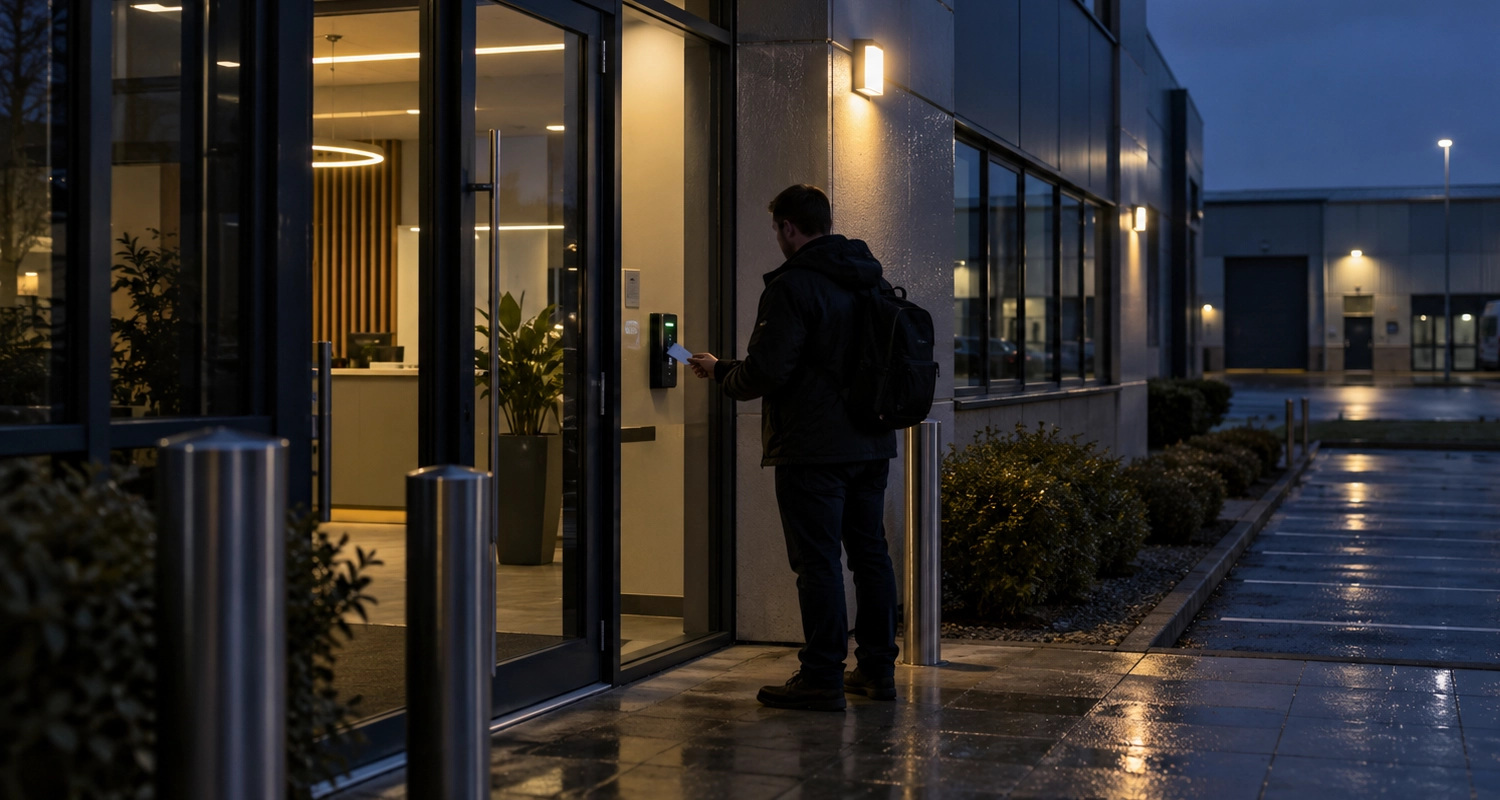
When an employee leaves a business, there is usually a well established process. Their laptop is returned, payroll is updated and digital accounts are closed. Physical access to the building, however, can be much easier to overlook.
The problem tends to develop gradually. Employees receive keys, cards or PIN codes as their responsibilities change. Contractors are given temporary access and managers pick up additional permissions as they move between sites. Unless removing that access is part of the same offboarding process, businesses can end up protecting today’s premises using yesterday’s permissions.
The important question is simple: could somebody who no longer works for you still get in?
When access outlives the employee
Shared PIN codes are a good example. They are convenient and inexpensive, but once somebody knows the number there is no practical way to make them forget it. Changing the code every time someone leaves can also mean notifying everyone else who still requires access, so the same PIN can remain in use for years.
Physical keys create a similar issue. A key can be returned, but businesses need confidence that all copies are accounted for. Across larger or multi site organisations, understanding exactly who holds which keys can become increasingly difficult.
Modern access control gives organisations much clearer options. Individual permissions can be granted according to role and removed when they are no longer required. Biometric technology such as facial recognition can go further by linking access to the individual rather than something they carry or a code they know.
Copeland Group Services has adopted Dahua facial recognition technology at its own head office, replacing traditional coded entry as part of that move towards stronger identity based access.
Offboarding should include the building
Physical access should be treated with the same discipline as digital access. When an employee or contractor leaves, organisations should consider keys, access cards, PIN codes, alarm information and permissions for restricted areas as part of the leaver process.
That does not mean every business needs to replace its existing security systems. It means businesses should be able to establish quickly who currently has access and remove permissions when circumstances change.
Professional keyholding and lock and unlock services can also reduce the number of employees who need physical keys in the first place, while Virtual Guard and monitored CCTV can provide additional visibility around access points. Where a permanent physical presence is appropriate, manned guarding provides another layer of oversight and professional judgement.
The strength comes from those measures supporting one another rather than expecting a single system to solve every security problem.
Could they still get in?
If somebody left six months ago, answering that question should not involve searching old spreadsheets or asking several managers whether they remember collecting a key.
Good access control is not simply about letting the right people into a building. It is about ensuring access changes when the organisation does.
At Copeland Group Services, we combine access control with professional keyholding, Virtual Guard, manned guarding, mobile patrols and other security services to create a blended approach appropriate to each organisation.
If you are reviewing who currently has access to your premises, we would be pleased to discuss how your existing arrangements could be strengthened.