Security has changed.
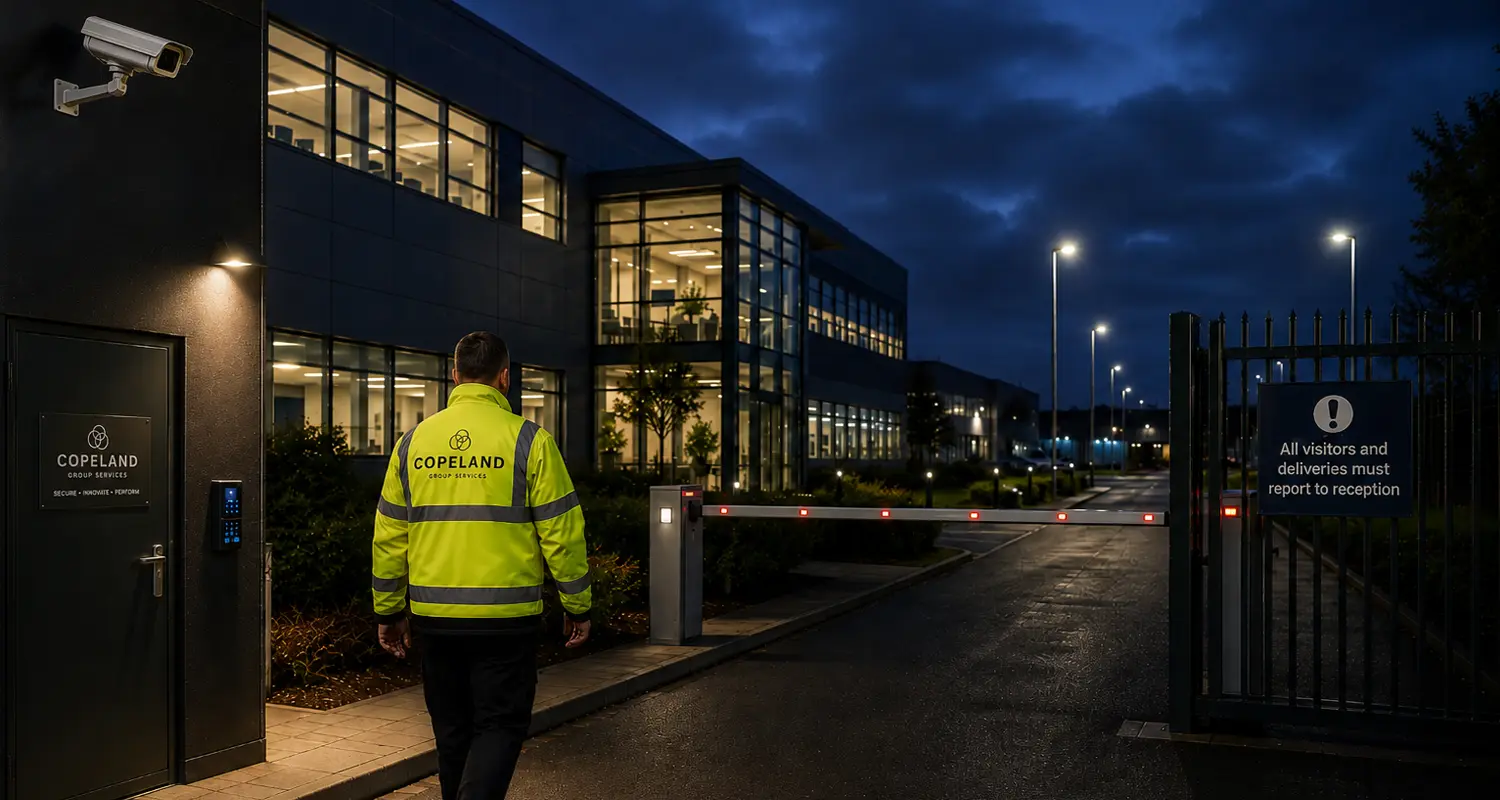
For many people, the word still creates the same image. A uniformed security officer standing at a gate. A receptionist checking visitors in. A CCTV camera quietly recording events after everyone has gone home.
Those elements remain important, but they no longer define what good security looks like.
Businesses have evolved significantly over the last decade. Sites operate around the clock, employees work increasingly flexible hours and organisations are expected to protect not only physical assets, but also people, information, reputation and business continuity. Security has had to evolve alongside those expectations.
Today, effective security is no longer about placing a guard at the entrance and hoping nothing happens. It is about understanding risk, reducing opportunities for incidents to occur and bringing together the right combination of people, technology and procedures to create a safer environment.
The role of the security officer has evolved
Professional security officers remain one of the most valuable assets any organisation can have.
Their judgement, experience and ability to assess situations cannot simply be replaced by technology. They provide reassurance to staff and visitors, deter criminal activity and often become an extension of the organisations they protect.
What has changed is the support available to them.
Modern security officers are increasingly backed by technologies that enhance rather than replace their role. Solutions such as Virtual Guard extend visibility across permanent and temporary sites, while TrakNet provides intelligent access management and site control. These systems allow security professionals to make better informed decisions and respond more effectively when situations arise.
The result is not fewer people. It is better equipped people, supported by technology that enables them to work smarter.
The strongest security strategies are layered
One of the biggest misconceptions about security is that a single product or service can solve every problem.
In reality, the organisations that are best protected rarely rely on one measure alone.
Instead, they create layers of protection that complement one another.
A professional security officer may be supported by monitored CCTV through Virtual Guard, while access to the building is managed through intelligent systems such as TrakNet. Employees arriving early or leaving late may benefit from professional lock and unlock services, reducing the need to attend empty premises alone. Mobile patrols and keyholding services add further resilience by providing rapid response when required.
Each layer performs a different role, but together they create a security strategy that is stronger, more adaptable and significantly more resilient than any individual measure operating on its own.
Protecting people is just as important as protecting property
Perhaps the biggest change in modern security is the growing recognition that security is fundamentally about people.
Of course businesses need to protect buildings, equipment and stock, but organisations are increasingly recognising their responsibility to create environments where employees feel safe.
That might be ensuring someone is not responsible for opening a building alone before sunrise. It could involve using monitored CCTV to provide reassurance that activity around a site is visible. It may be introducing access control that gives employees confidence that only authorised individuals can enter the premises.
These measures do more than reduce crime.
They contribute to staff wellbeing, improve confidence and demonstrate that organisations take the safety of their people seriously.
Security is now a business decision
Security is no longer simply a facilities management issue.
It increasingly forms part of conversations around operational resilience, business continuity, insurance, compliance and organisational reputation.
A security incident rarely affects just one department. The consequences can extend across an entire organisation, disrupting operations, affecting customers and creating costs that reach far beyond the immediate incident.
That is why businesses are beginning to view security as an investment in resilience rather than simply a cost to be managed.
The organisations that embrace this mindset are often better prepared, more adaptable and more confident when facing new challenges.
Looking beyond guards and gates
Physical security will always have an important role to play, but the organisations that are best protected today recognise that security is no longer defined by a single guard, a fence or a camera.
It is created by bringing together professional expertise, intelligent technology and well designed procedures into a strategy that supports the way a business actually operates. When security officers are complemented by solutions such as Virtual Guard, TrakNet, professional lock and unlock services and proactive site management, organisations gain far greater visibility and resilience than any individual measure could provide on its own.
Perhaps the biggest change is one of mindset. Security is no longer simply about reacting when something goes wrong. It has become an important part of business continuity, employee wellbeing and operational confidence.
Because security isn’t just about responding when something goes wrong.
It’s about reducing the chances of it happening in the first place.
If your organisation is looking to develop a more resilient, layered approach to protecting its people, premises and assets, Copeland Group Services can help.