Most businesses understand the importance of having an alarm system.
What is often overlooked is what happens when that alarm activates unnecessarily.
A false alarm might seem like a minor inconvenience, but repeated activations can have a much wider impact than many organisations realise. They consume valuable time, interrupt operations, create unnecessary costs and can even reduce confidence in the very systems designed to protect a site.
For facilities managers and business owners, false alarm call outs are rarely just about the alarm itself. They represent lost productivity, unnecessary disruption and an opportunity to review whether security procedures are working as effectively as they should.
Why do false alarms happen?
False alarms are more common than many people expect.
Sometimes they are caused by genuine equipment faults or environmental conditions, but more often they stem from everyday operational issues. A building may not have been secured correctly at the end of the day, an employee may have forgotten part of the closing procedure, or someone may have entered a restricted area without following the correct process.
As organisations become busier and sites more complex, the opportunities for human error naturally increase.
That is why reducing false alarms is not simply about maintaining alarm systems. It is about looking at the wider security picture.
The hidden cost to businesses
When an alarm activates outside working hours, somebody has to respond.
For some organisations, that responsibility falls on managers or senior members of staff who receive a late night phone call asking them to attend site. Even when the alarm proves to be false, the disruption has already occurred.
Beyond the immediate inconvenience, false alarm call outs can create wider costs. Employees lose personal time, productivity is affected the following day and organisations may incur charges from alarm response providers or face unnecessary demands on emergency services where appropriate.
There is also the operational impact of repeatedly interrupting people who already have significant responsibilities elsewhere in the business.
Over time, these hidden costs can become far more significant than the occasional inconvenience many businesses assume them to be.
The danger of becoming complacent
Perhaps the greatest risk associated with repeated false alarms is complacency.
If a business experiences frequent unnecessary activations, it becomes increasingly easy for people to assume that the next one will also be a false alarm.
That mindset can delay responses when a genuine incident occurs.
Good security relies on maintaining confidence that when an alarm activates, it deserves attention.
Reducing unnecessary activations helps ensure that genuine incidents receive the urgency they require.
Looking beyond the alarm itself
An alarm system is only one part of a wider security strategy.
If employees are responsible for locking up after a busy day, if access to the building is poorly managed or if opening and closing procedures vary between different members of staff, false alarms are far more likely to occur.
This is why many organisations are moving towards more structured approaches that combine technology with professional security services.
Professional lock and unlock services ensure premises are consistently secured. Modern access control systems improve accountability by managing who can enter the building and when. Intelligent technologies such as Virtual Guard provide greater visibility across a site, while keyholding and alarm response services ensure trained professionals attend incidents when required.
Rather than viewing alarms in isolation, businesses are increasingly recognising that they work best as part of a layered security strategy.
Supporting employee wellbeing
There is another consequence of false alarm call outs that is often overlooked.
When managers or employees are repeatedly expected to attend sites outside working hours, particularly during the night or early morning, it places additional pressure on individuals whose primary role is not security.
For some, it can also create genuine concerns around personal safety, particularly when attending empty premises alone.
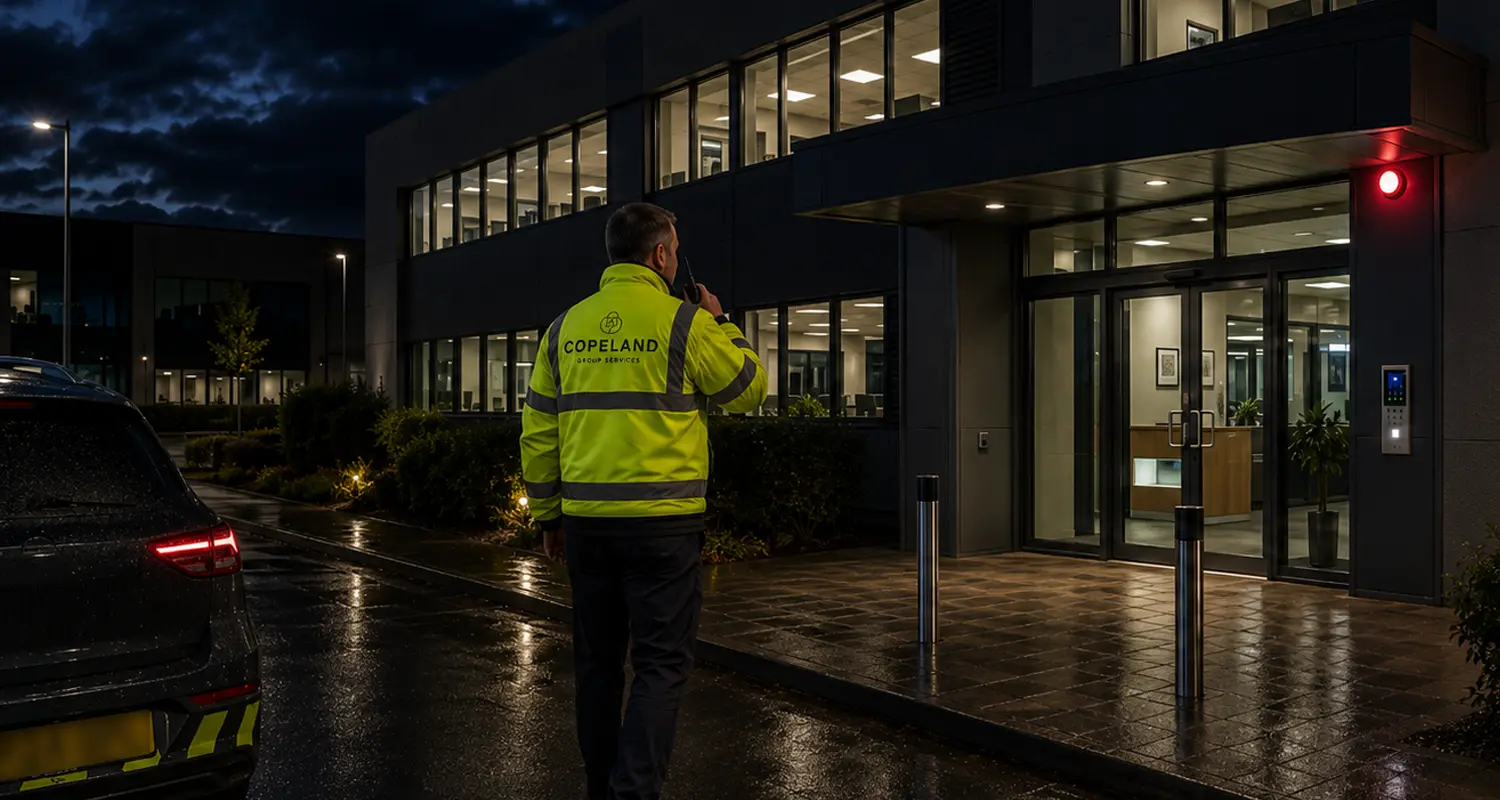
Professional keyholding and alarm response services remove that responsibility from internal teams, allowing trained security professionals to attend site, assess the situation and take appropriate action where necessary.
That not only improves operational resilience but also demonstrates a commitment to employee wellbeing.
Reducing false alarms through a blended approach
There is rarely a single solution to reducing false alarm call outs.
The most effective organisations look at how different security measures support one another.
This may involve combining professionally managed lock and unlock services with intelligent access control, Virtual Guard monitoring, keyholding, mobile patrols and manned guarding where appropriate.
Each element contributes to a more consistent and resilient security strategy, reducing opportunities for error while improving confidence that genuine incidents will be identified and managed appropriately.
Looking beyond the call out
False alarms are often dismissed as an unavoidable part of running a business.
In reality, they can provide valuable insight into how effectively security procedures are operating.
Every unnecessary activation presents an opportunity to ask whether the right people, technology and processes are working together as they should.
Because effective security is not measured by how often an alarm sounds.
It is measured by how confidently a business can respond when it really matters.
If your organisation is looking to reduce false alarm call outs and strengthen its overall security strategy, Copeland Group Services can help.