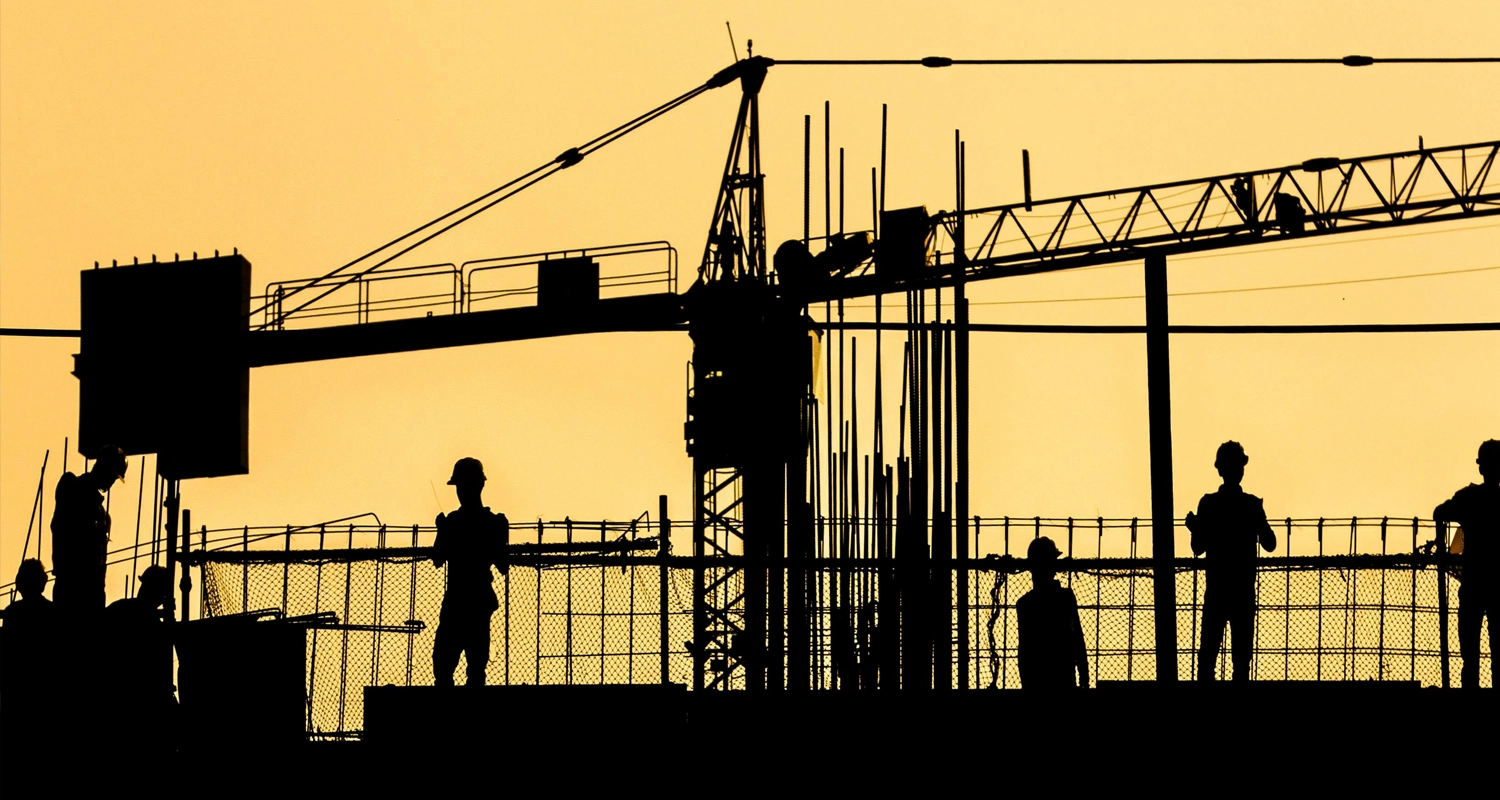
Construction sites have always presented security challenges.
What has changed is the complexity of the environment that needs protecting.
A modern construction site can contain expensive plant, specialist tools, fuel, valuable materials and temporary infrastructure, while hundreds of employees, subcontractors, delivery drivers and visitors may move through the site during different stages of a project.
The site itself is constantly changing too. A perimeter that provides effective protection today may need moving next month. New buildings create different access points, valuable equipment moves between locations and areas that were once highly visible can become concealed as construction progresses.
Effective construction security therefore cannot simply be installed at the beginning of a project and forgotten.
It needs to evolve with the site.
Construction sites create constantly changing risks
Most permanent commercial buildings eventually reach a relatively stable operating environment.
Construction sites rarely do.
During the early stages of a project, the primary challenge may be controlling access to an open site containing plant and temporary compounds. Later, valuable materials, mechanical equipment and internal fixtures may arrive, changing both the value of what needs protecting and the areas most likely to attract unwanted attention.
The workforce changes too. Different trades arrive as the project progresses, subcontractors complete their work and leave, while deliveries and specialist teams may require temporary access to particular areas.
This creates a security challenge that is as much about understanding legitimate activity as it is about identifying unauthorised access.
A security strategy that worked during groundwork may not necessarily be appropriate when a project reaches fit out.
Theft can affect far more than the value of what is taken
Construction sites contain many items that can be attractive to thieves, from tools and building materials to fuel and plant equipment.
The immediate financial loss is often only the beginning.
If equipment required for a particular stage of work disappears overnight, teams may be unable to continue the following morning. Replacement materials need sourcing, deliveries may need rearranging and subcontractors can be left waiting while the problem is resolved.
Even relatively small thefts can therefore have consequences far beyond the replacement value of the item itself.
Construction security is not simply about protecting assets.
It is also about protecting progress.
Controlling who enters the site matters
Not every construction security challenge happens after everyone has gone home.
During working hours, large sites can have significant numbers of people moving through them. Employees, subcontractors, visitors and delivery drivers may all have legitimate reasons to be present, but they do not necessarily require access to every part of the project.
Effective access control helps organisations manage that movement more consistently.
Modern systems can provide greater oversight of authorised access and reduce reliance on traditional keys or shared credentials. Depending on the requirements of the site, biometric technologies such as facial recognition can also provide additional confidence by verifying the individual rather than simply validating something they possess or know.
This is particularly useful in environments where the workforce changes regularly and clear accountability over site access is important.
The site does not stop being vulnerable when the workforce leaves
The character of a construction site changes significantly outside working hours.
A busy environment containing hundreds of people during the day can become almost completely empty at night. Valuable equipment and materials remain, but many of the people who would naturally notice unusual activity have gone home.
This is where visibility becomes particularly important.
Copeland’s Virtual Guard approach can extend oversight beyond the working day, while EcoWatch Rapid Deployment CCTV provides a flexible option for construction environments where permanent CCTV infrastructure may not yet be practical.
Rapid deployment is particularly relevant because construction sites do not remain static. As buildings rise and compounds move, camera positions and areas of vulnerability can change.
Security needs to be capable of changing with them.
Technology cannot provide every layer of protection
Greater visibility does not remove the value of physical security.
For some construction projects, a professional security officer provides an important visible deterrent while also helping manage access, interact with contractors and respond to issues on site.
Mobile patrols can provide an additional physical presence outside working hours without requiring an officer to remain permanently at every location. They can also complement monitored CCTV by providing physical attendance where something requires further investigation.
This is why the strongest construction security strategies tend to be blended.
Technology provides visibility across large and changing environments, while experienced security professionals provide judgement, interaction and physical response.
Neither needs to compete with the other.
Protecting people is part of construction security too
Construction security is sometimes discussed entirely in terms of preventing theft.
But a secure site is also about protecting the people working within it.
Controlling access helps reduce the likelihood of unauthorised individuals entering potentially dangerous working environments. Consistent opening and closing procedures can help ensure sites are properly secured at the beginning and end of each working day, while professional security provides an additional point of contact when issues arise.
For project managers and principal contractors, effective security therefore supports the wider management of the site rather than simply protecting equipment.
The objective is to create an environment where legitimate work can continue safely and with minimal disruption.
Security needs to evolve alongside the project
Perhaps the biggest mistake organisations can make with construction security is treating it as a fixed requirement.
A project can last months or years. During that time, the buildings, workforce, access points, valuable assets and surrounding environment can all change considerably.
Security provision should be reviewed alongside those changes.
That may mean repositioning temporary CCTV as the project develops, reviewing access permissions as subcontractors leave, adjusting patrol requirements or changing the level of physical guarding as the value and vulnerability of the site changes.
The best construction security strategy is therefore not necessarily the one with the most security.
It is the one that continues to provide the right security at the right stage of the project.
Building security around the site
Every construction project is different, which means effective security begins by understanding the site rather than simply selecting individual products.
At Copeland Group Services, our approach combines manned guarding, Virtual Guard, EcoWatch Rapid Deployment CCTV, mobile patrols, access control, professional lock and unlock services, keyholding and alarm response and TrakNet Technologies to create security strategies that can adapt as projects progress.
The objective is not simply to respond when something goes wrong.
It is to reduce opportunities for incidents, protect the people and assets on site and help keep the project moving.
If you’re reviewing security for an existing construction project or planning security requirements for a new site, contact Copeland Group Services to discuss the right combination of services for your project.
Photo by Shivendu Shukla on Unsplash