Most people only think about a security control room when something has already happened.
An alarm activates. CCTV identifies unusual activity. A security officer needs support or a mobile response is required somewhere across the estate.
Behind that response is a less visible part of the security operation: the people responsible for receiving information, assessing what is happening and making sure the right action follows.
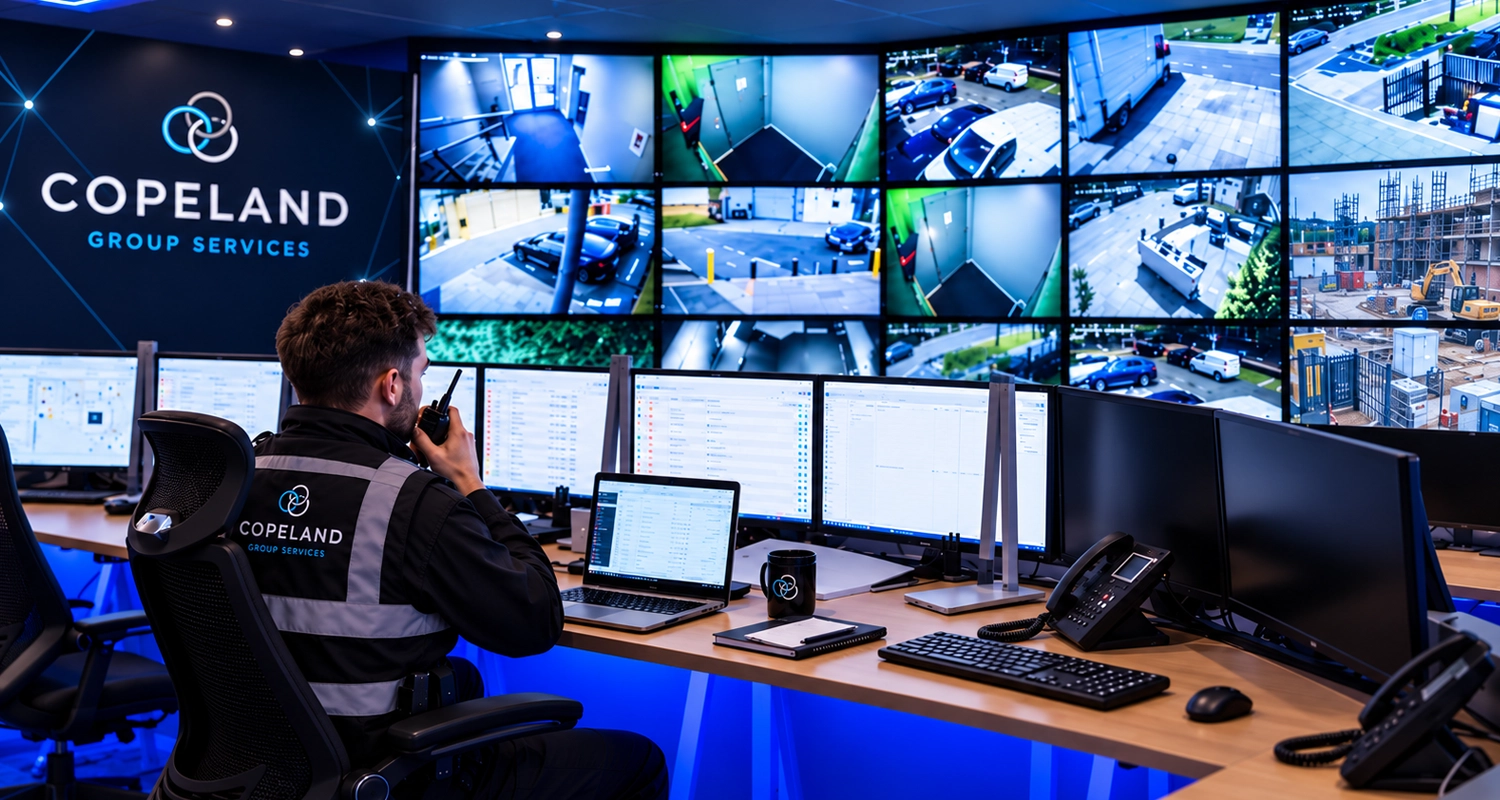
A modern 24 hour security control room is therefore far more than a bank of CCTV screens. It acts as a central point connecting monitoring, security officers, mobile teams, keyholding and the operational information needed to manage incidents effectively.
For clients, much of that work happens quietly in the background.
That is exactly how it should be.
The control room provides continuous oversight
Security requirements do not disappear when an office closes or the management team goes home.
Commercial premises, construction sites, warehouses and other facilities remain exposed overnight, during weekends and across holiday periods. A 24 hour control room provides continuity during those quieter hours.
Depending on the services being delivered, operators may be supporting monitored CCTV, alarm activations, security officers working across client locations and mobile teams attending sites.
The role is not simply to wait for something to go wrong.
A well managed control room provides an operational connection between the different parts of the security service, helping ensure information reaches the people who need it when they need it.
An alert needs context
Modern security systems generate information constantly.
A camera identifies movement. An alarm activates. A security officer reports something unusual or an access event requires attention.
The important question is what that information actually means.
Movement on CCTV might indicate suspicious activity, but it could also be an authorised employee arriving early. An alarm may indicate attempted access, or there may be another explanation that needs investigating.
This is where experienced control room operators add value.
Technology can highlight activity, but people provide context. They can assess the information available, consider the client’s agreed procedures and determine whether the situation needs monitoring, escalation or physical attendance.
That process helps prevent security from becoming a collection of disconnected alerts.
Supporting officers in the field
The control room also provides an important layer of support for security officers and mobile teams working across different locations.
A manned guard on a client site may need to report an incident or request additional information. A mobile patrol officer could be attending an alarm activation and require details about the premises before arriving.
Having a central operational point means those individuals are not working in isolation.
The control room can help coordinate information and response, creating a link between what is happening on the ground and the wider security operation.
For clients, this can provide greater consistency. Instead of relying entirely on the knowledge of one officer at one location, the service has additional operational support behind it.
Remote monitoring extends visibility
One of the biggest changes in control room operations has been the growth of remote monitoring.
Through Virtual Guard, CCTV can provide visibility across sites when a physical officer is not standing in that particular location. Intelligent technology can help bring relevant activity to the attention of operators, who can then assess what they are seeing.
This does not make physical security less important.
It can make it more focused.
If something requires investigation, information from the control room can help a mobile patrol or security officer understand the circumstances before attending. Where a site already has manned guarding, remote visibility can extend awareness beyond the officer’s immediate field of view.
Technology and physical presence therefore support one another rather than competing for the same role.
Technology helps manage growing amounts of information
As security operations become more connected, control rooms are required to manage increasing volumes of information.
That is one reason technologies such as T.A.L.I.U.M., the Tactical, Adaptive, Logical, Intelligent, Unified Manager, are becoming important within Copeland’s wider security operation.
T.A.L.I.U.M. has been developed as an AI enabled operational assistant designed to support experienced professionals in working with information more effectively.
The principle is straightforward.
Artificial intelligence can help process information and support operational awareness, while experienced people remain responsible for understanding context and making decisions.
For the control room, that means technology should make operators better informed rather than simply trying to automate people out of the process.
The control room connects the wider security strategy
The real value of a 24 hour security control room becomes clearer when it is viewed as part of a blended security service.
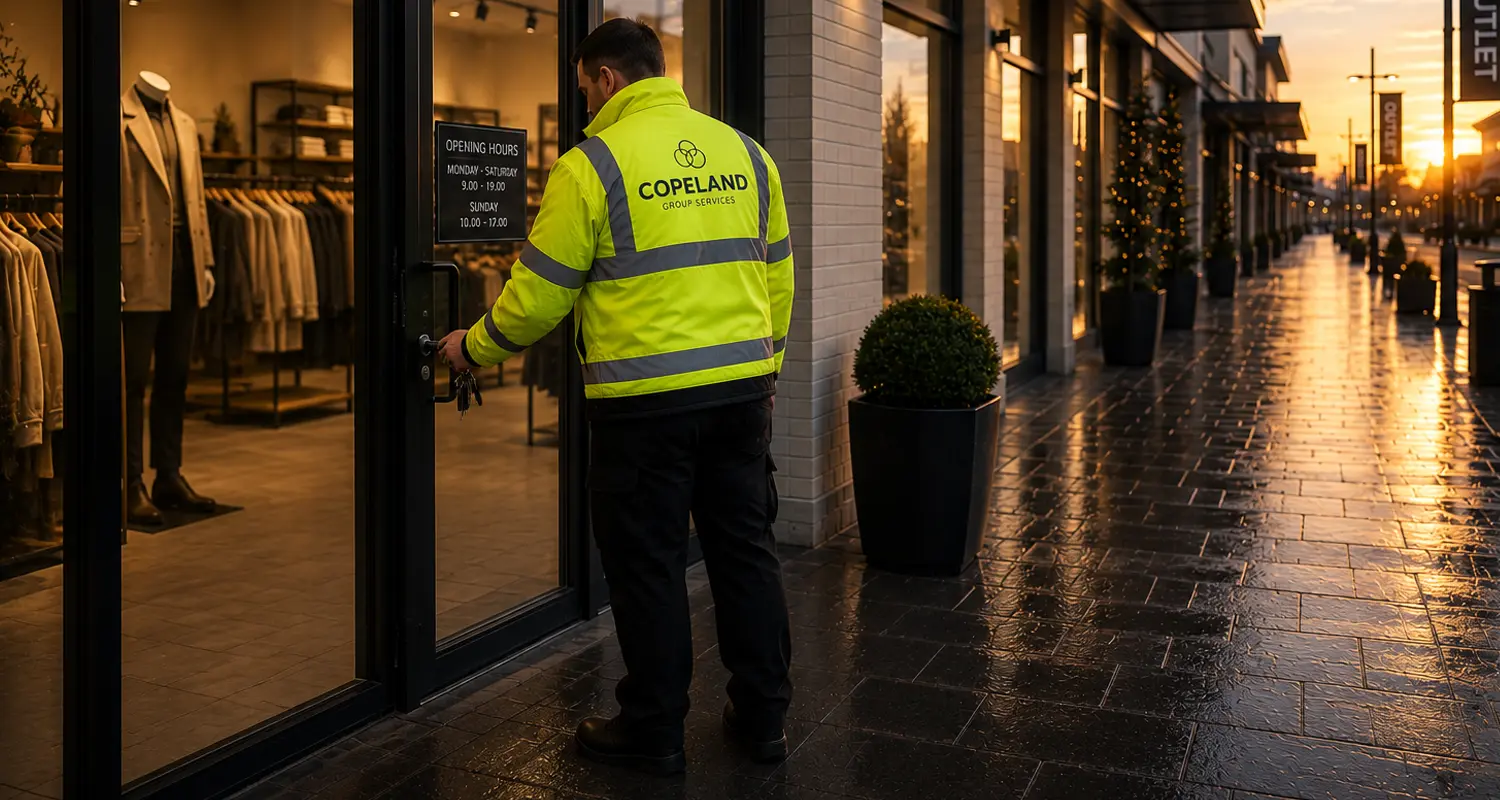
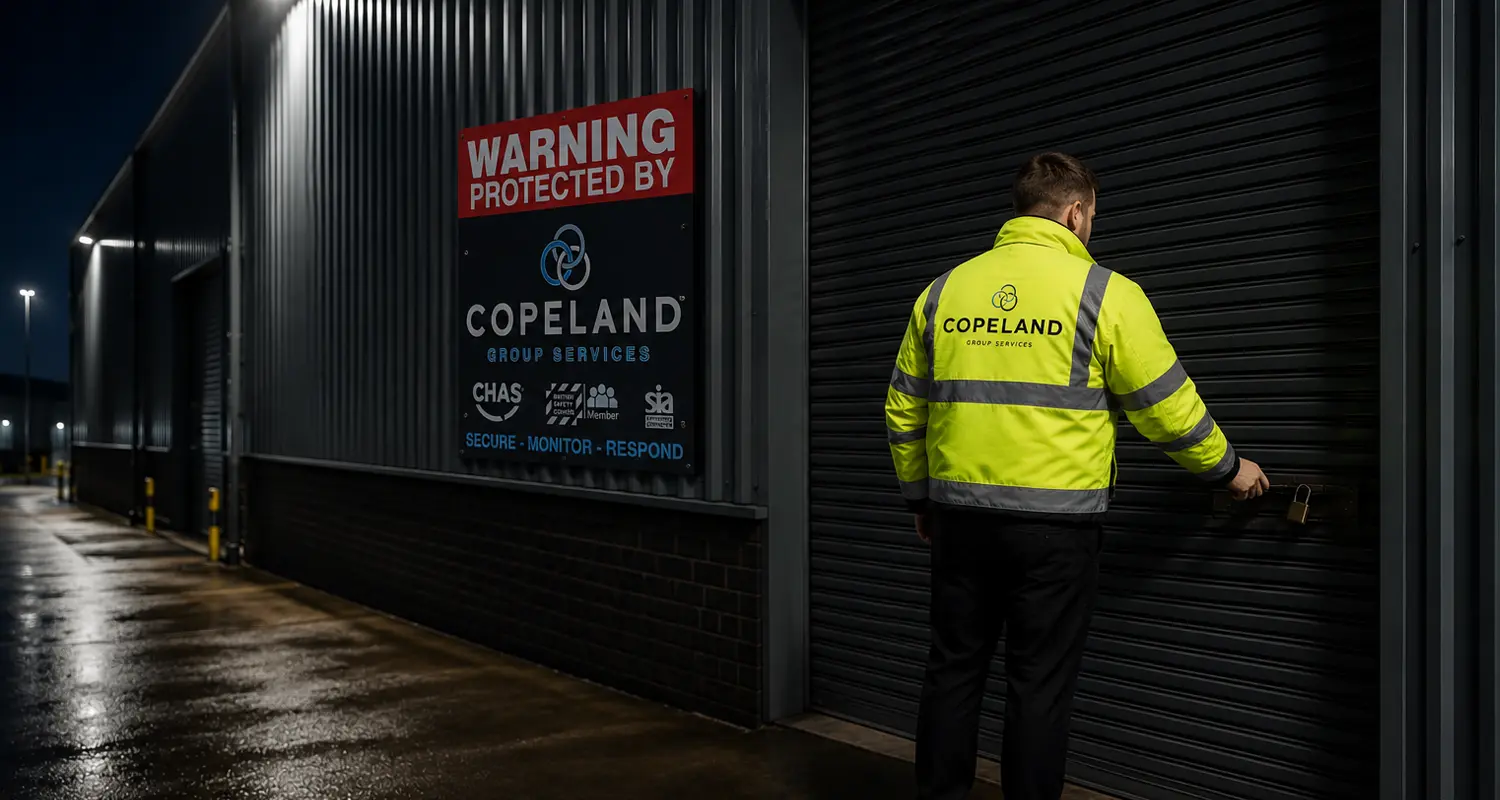
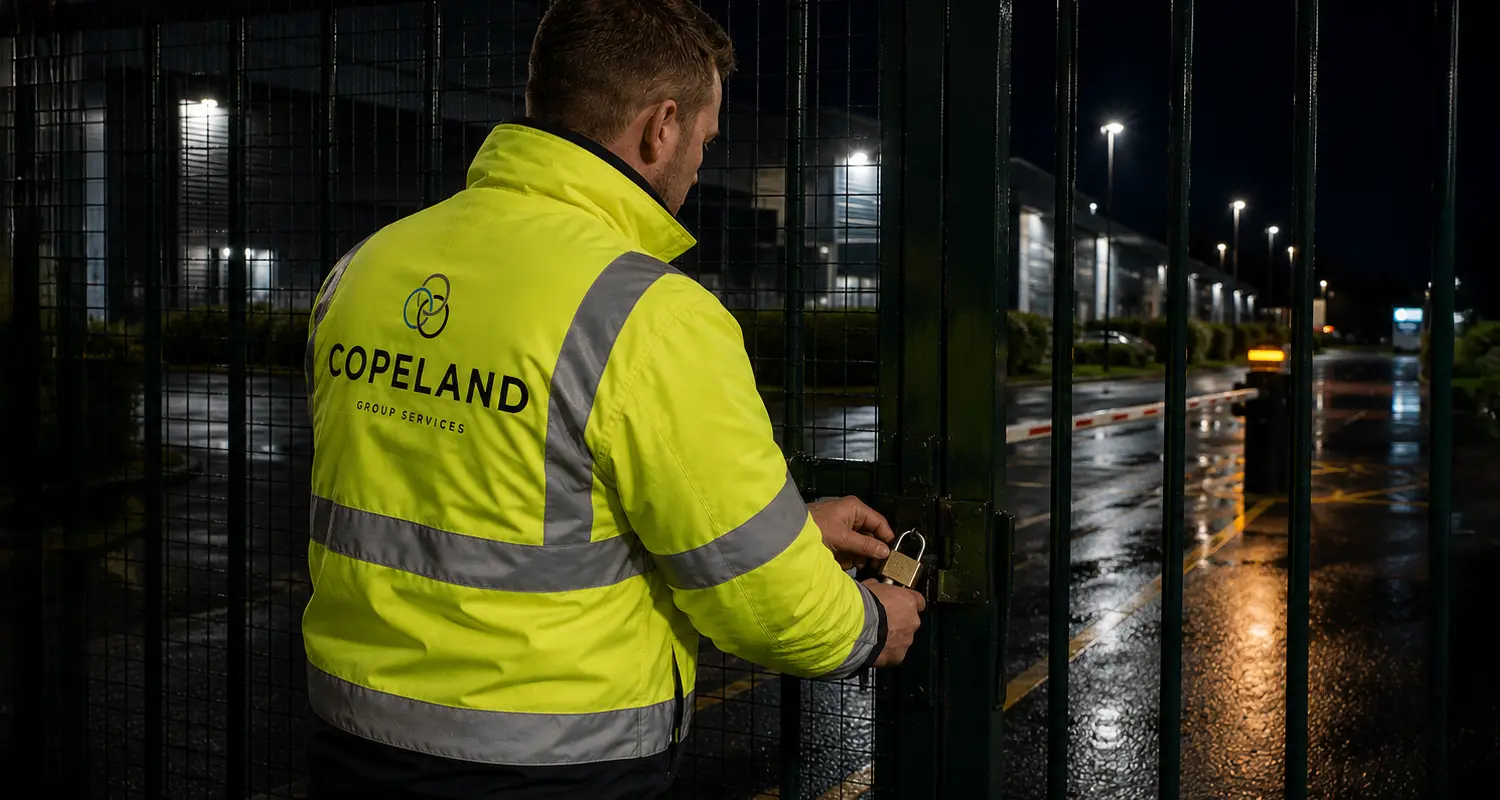
Virtual Guard provides remote visibility. Manned guarding provides a permanent physical presence where it is required. Mobile patrols extend that presence across other locations, while professional keyholding and alarm response provides attendance when an incident occurs outside normal working hours.
Professional lock and unlock services, access control and EcoWatch Rapid Deployment CCTV can add further layers depending on the individual site.
The control room helps connect those elements.
That means the client is not simply buying a camera, an officer or an alarm response service.
They are buying access to an operational structure designed to keep those different services working together.
The part of security clients rarely see
Much of good security is deliberately uneventful.
An alert is assessed correctly. An officer receives the information they need. A mobile patrol attends when required and the client wakes up the following morning without having spent the night trying to coordinate a response themselves.
The control room sits behind many of those outcomes.
At Copeland Group Services, our 24 hour control room supports the wider delivery of Virtual Guard, manned guarding, mobile patrols, keyholding and alarm response and other elements of our blended security approach.
Because effective security is not simply about seeing an incident.
It is about making sure the right people know what is happening and what needs to happen next.
If you are reviewing how monitoring, guarding or response services work across your organisation, contact Copeland Group Services to discuss how a connected security operation could support your sites.
Discover more insights
Interested in learning more about business security? Explore our related posts below for further guidance.