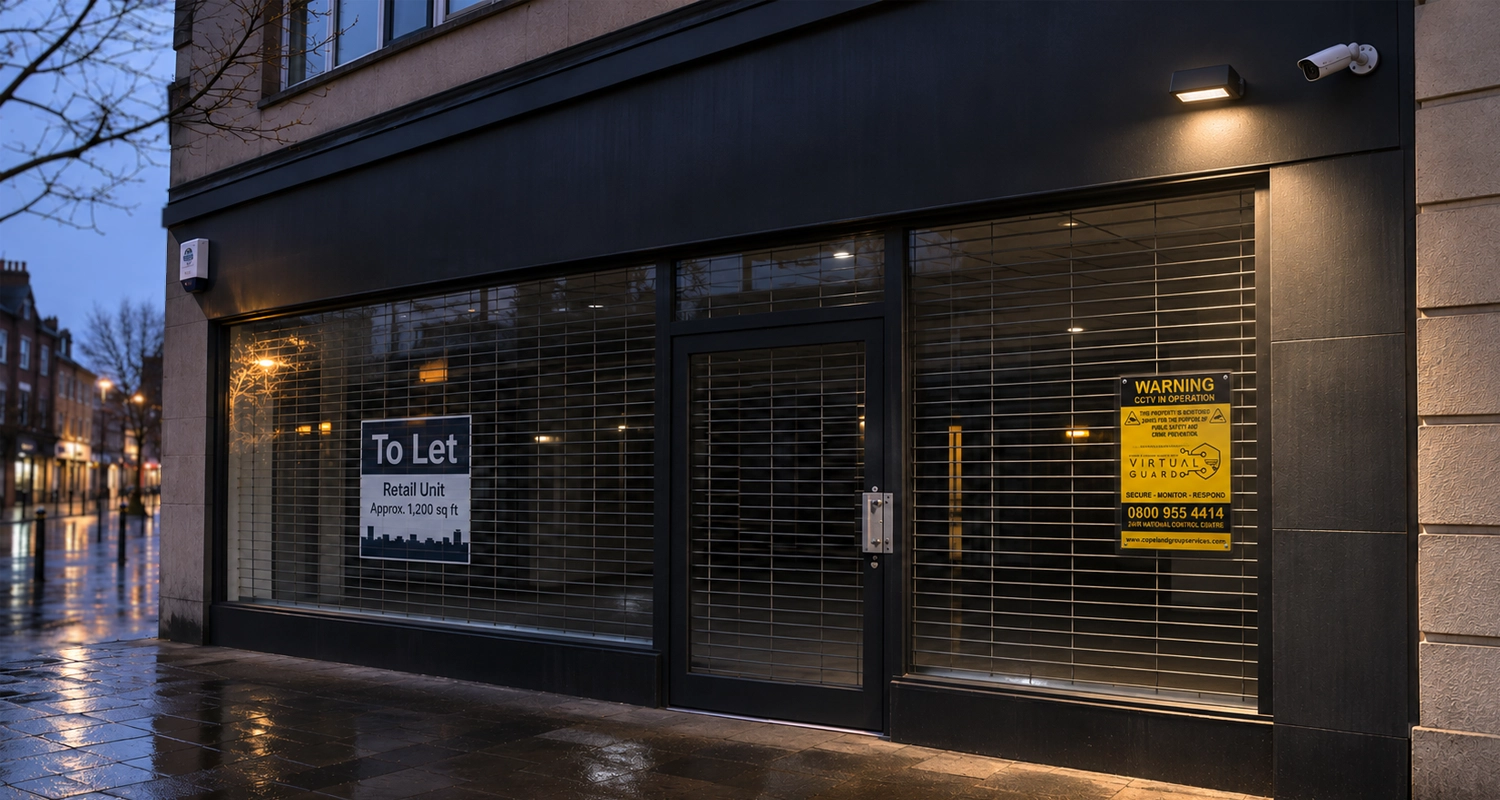
An empty commercial building can sometimes look like a lower security risk. There are no employees to protect, fewer visitors to manage and little day to day activity taking place.
In reality, vacancy can create a completely different set of problems.
Once a property is known to be unoccupied, it can become more attractive to trespassers, thieves and vandals. Damage may also remain unnoticed for longer because there are fewer people naturally passing through the building each day.
For landlords, property managers and businesses between occupiers, vacant property security is therefore less about protecting normal operations and more about maintaining visibility and control while those operations have stopped.
Empty buildings lose their natural security
Occupied premises have a level of protection simply because people are present. Employees arrive and leave, deliveries take place and unusual activity is more likely to be noticed.
When a building becomes vacant, that natural oversight disappears.
A damaged door, attempted entry or activity around the perimeter may go unnoticed until somebody next visits the property. The longer a building remains empty, the greater the opportunity for smaller problems to develop into more significant ones.
Vacant premises can also contain assets that remain attractive despite the building being unused. Fixtures, equipment, cabling and building materials may still have value, while vandalism can create repair costs that far exceed anything actually stolen.
Visibility becomes particularly important
Maintaining oversight does not necessarily mean placing a permanent security officer at every vacant property.
Monitored CCTV through Virtual Guard can provide visibility when nobody is routinely present, allowing activity around entrances, car parks, yards and other agreed areas to be assessed remotely.
For properties where permanent CCTV infrastructure is not available or proportionate, EcoWatch Rapid Deployment CCTV can provide a flexible alternative.
The important point is that cameras should form part of a response process. Recording footage can provide useful evidence after an incident, but monitoring creates the opportunity to identify activity while it is happening and decide whether further action is required.
Physical checks still have a role
Remote monitoring cannot identify every issue inside an empty building.
Regular mobile patrols can provide a physical security presence while also allowing agreed areas to be checked. Depending on the property, this might include checking access points, gates or signs of obvious damage and reporting anything requiring attention.
Professional keyholding and alarm response can add another layer by ensuring trained security personnel are available if an alarm activates rather than relying on a landlord, facilities manager or employee to attend an uncertain situation.
For higher risk properties, manned guarding may also be appropriate where a permanent physical presence is justified.
The right approach depends on the building, its location, how long it will remain empty and what still needs protecting.
Vacancy should trigger a security review
A security arrangement designed for an occupied building may not remain appropriate once the workforce leaves.
Access permissions may need reviewing, unnecessary keys should be accounted for and CCTV coverage may need adjusting to reflect different areas of vulnerability. The way the property is opened, inspected and secured should also be clearly defined.
At Copeland Group Services, vacant property security can combine Virtual Guard, EcoWatch Rapid Deployment CCTV, mobile patrols, keyholding and alarm response, manned guarding and access control according to the requirements of the individual premises.
An empty building is not necessarily a safe building.
The challenge is maintaining visibility and professional oversight when the people who would normally notice a problem are no longer there.
If you are responsible for a vacant commercial property, contact Copeland Group Services to discuss the most appropriate security arrangements for the site.