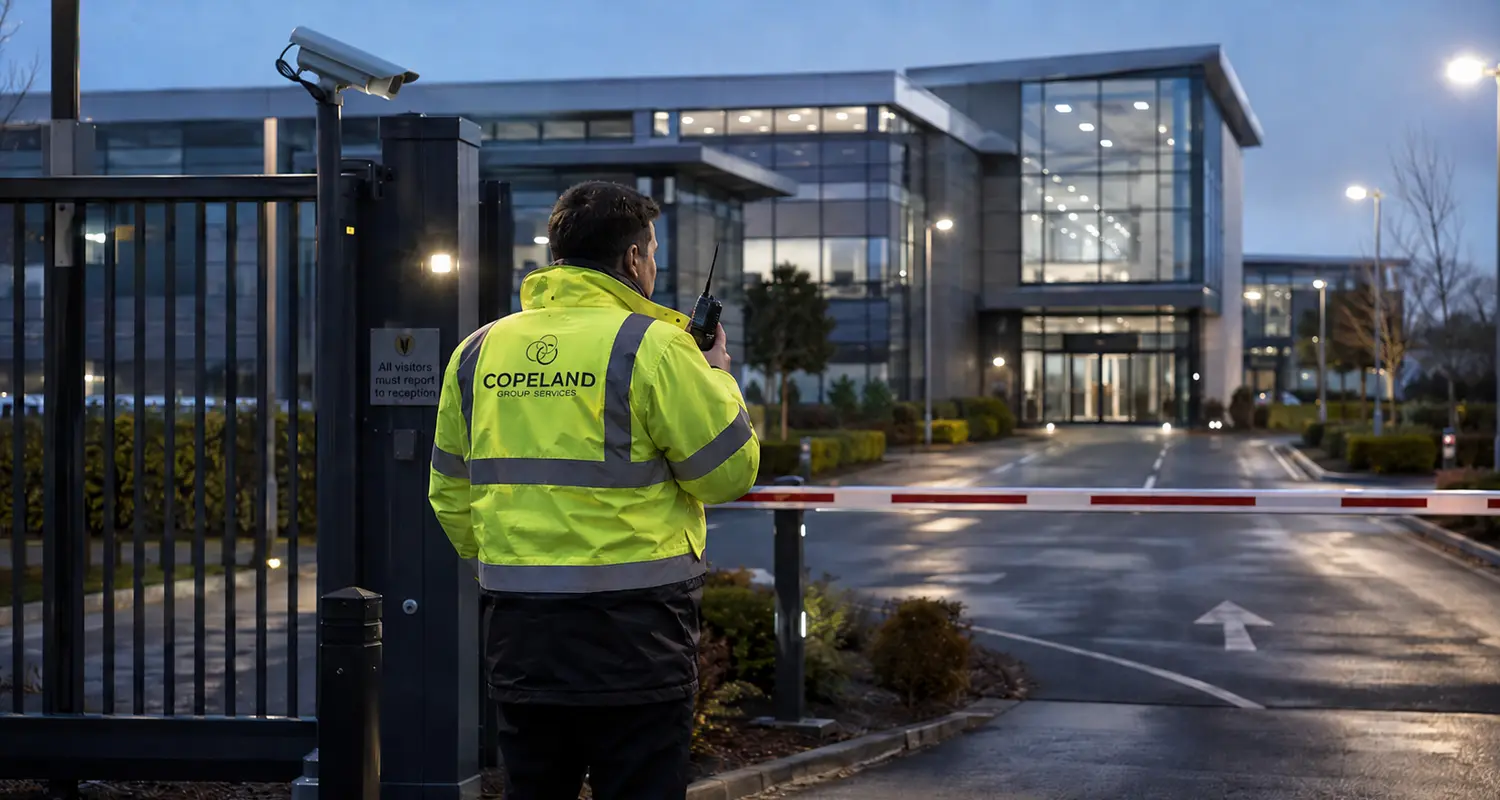
For many years, security was measured by what happened after an incident.
How quickly could someone respond to an alarm? How long would it take for a security officer to arrive? How effectively could CCTV footage be reviewed after a break in had occurred?
These were, and still are, important questions.
But they all have one thing in common.
They assume something has already gone wrong.
Increasingly, businesses are beginning to challenge that way of thinking. Rather than asking how quickly they can react to an incident, they are asking how they can reduce the likelihood of the incident happening in the first place.
It is a subtle change in mindset, but one that is reshaping the way organisations think about security.
Prevention begins long before an incident
When people hear the phrase preventative security, they often imagine sophisticated technology or expensive new systems.
In reality, prevention usually starts with understanding how a business operates.
Every organisation has routines that become so familiar they are rarely questioned. Staff arrive at roughly the same time each morning. Contractors know which entrance to use. Managers lock up at the end of the day before heading home. Deliveries arrive through the same gates and visitors report to the same reception desk.
Most of the time these routines work perfectly.
The challenge is that routine can also create complacency.
When procedures become automatic, people naturally stop thinking about them. A door is assumed to have been locked because someone always locks it. An alarm is assumed to have been set because it usually is. A contractor is assumed to have permission because they were on site last week.
Preventative security encourages organisations to step back and challenge those assumptions before they become vulnerabilities.
Security is about reducing opportunity
The vast majority of security incidents are not the result of highly sophisticated criminal planning.
They happen because an opportunity presents itself.
A door is left unsecured.
Access credentials are shared between colleagues.
A vacant building goes unmonitored over a weekend.
A contractor enters an area they shouldn’t because nobody questioned why they were there.
Individually these situations may seem insignificant. Collectively they create an environment where incidents become more likely.
Preventative security focuses on reducing those opportunities.
Sometimes that means introducing better technology. Sometimes it means changing procedures. Quite often it simply means bringing greater consistency to the way security is managed every day.
The objective is not to create unnecessary complexity. It is to make the secure option the normal option.
People remain at the centre of good security
Technology has transformed the security industry, but it has not removed the need for people.
In many respects, it has made experienced security professionals even more valuable.
Technology is excellent at collecting information. Cameras provide visibility across a site, access control systems record who enters a building and intelligent platforms highlight unusual activity.
What technology cannot do is understand context.
It cannot recognise that a contractor is behaving differently from usual because they have entered an unfamiliar part of the site. It cannot reassure an employee who feels vulnerable while opening an office before daylight. It cannot make balanced decisions when several events occur at once.
That is why the strongest organisations combine intelligent technology with experienced people.
One supports the other.
Neither replaces the other.
Prevention also means protecting employees
One of the most positive developments in recent years has been recognising that security is not only about protecting buildings and assets.
It is also about protecting the people who work within them.
An employee arriving at an empty office before sunrise faces different considerations to someone arriving during a busy working day. Likewise, the responsibility of locking up after everyone else has left can place individuals in situations where they feel isolated or exposed, particularly during the darker winter months.
These are not dramatic risks, but they are real ones.
Professional security services can help remove much of that burden. Consistent lock and unlock procedures, monitored sites, effective access control and trained personnel attending alarm activations all contribute towards creating environments where employees feel safer carrying out their everyday responsibilities.
Good security should provide reassurance as well as protection.
Building resilience instead of simply responding
Perhaps the biggest difference between reactive and preventative security is where organisations invest their attention.
Reactive security concentrates on managing incidents effectively.
Preventative security concentrates on reducing the conditions that allow those incidents to happen.
That distinction influences almost every security decision a business makes.
Rather than asking whether a CCTV system records good quality footage, organisations begin asking whether someone would know if unusual activity was taking place in real time.
Instead of asking who will respond if an employee forgets to lock the building, they ask how that situation can be prevented altogether.
Instead of assuming that security starts when an alarm activates, they recognise that it begins much earlier through planning, consistency and good operational discipline.
It is a different way of thinking, but one that often leads to better outcomes.
Looking ahead
Security will always involve responding to incidents. No organisation can eliminate risk entirely.
The goal is not perfection.
The goal is to reduce unnecessary opportunities, strengthen resilience and create an environment where incidents become less likely in the first place.
That is why preventative security is becoming such an important conversation across modern businesses.
It reflects a broader understanding that security is not simply a service delivered when something goes wrong. It is an ongoing process that supports business continuity, protects employees and helps organisations operate with greater confidence.
At Copeland Group Services, we believe the most effective security strategies combine experienced people, intelligent technology and consistent operational procedures. Whether that’s through Virtual Guard, manned guarding, mobile patrols, professional lock and unlock services, keyholding and alarm response, access control or EcoWatch Rapid Deployment CCTV, each service contributes to a layered approach that helps businesses prevent incidents as well as respond to them.
Because the best security incident…
…is often the one that never happens.