Handing a security company the keys to your premises requires a considerable amount of trust.
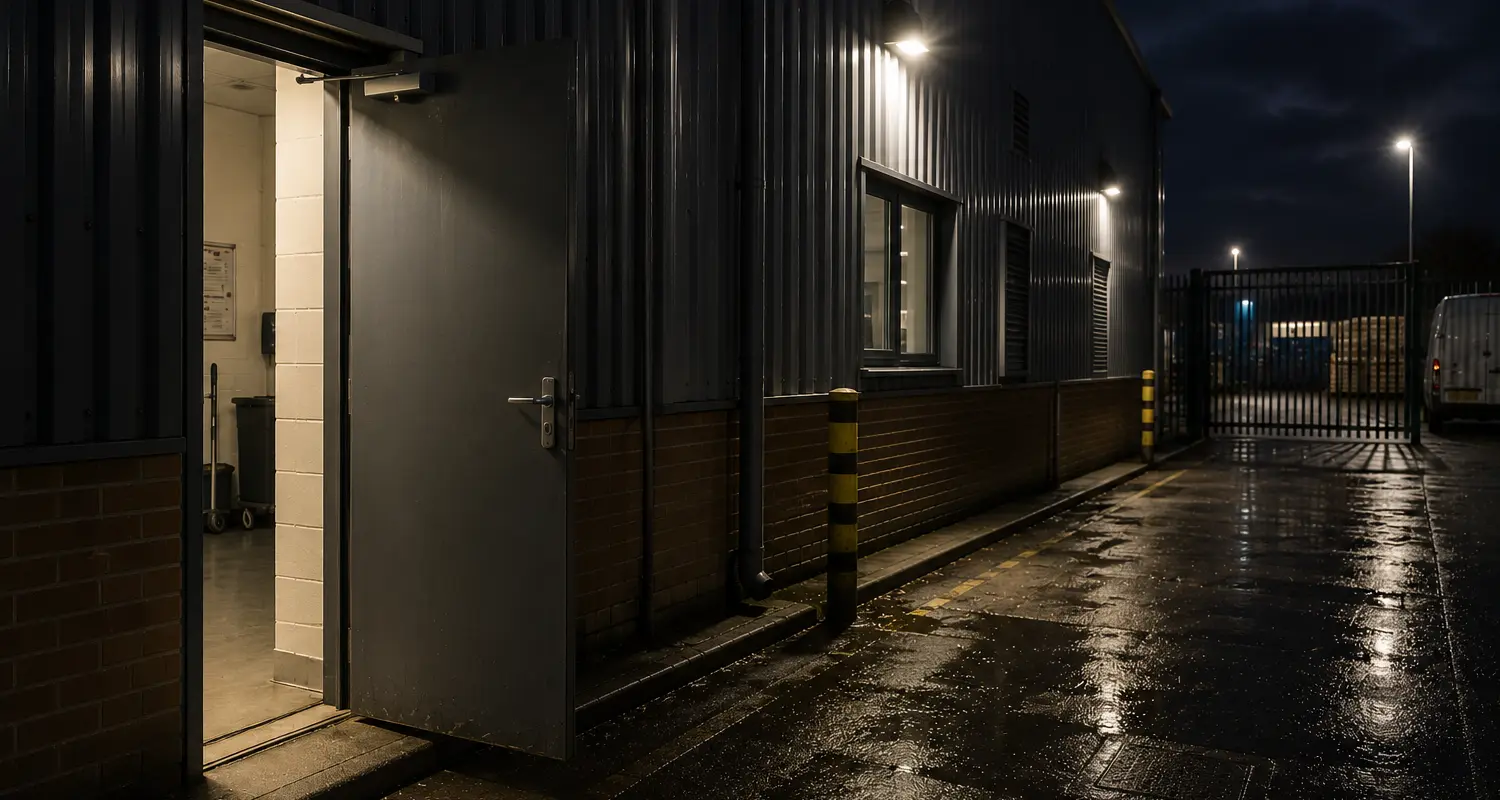
Those keys may provide access to an office, warehouse, construction site or industrial facility containing valuable equipment, confidential information and the people who work there every day. Yet once professional keyholding is arranged, many businesses rarely think about what happens to the keys themselves.
The important point is that professional keyholding is not simply about giving somebody a spare set. It is about creating a controlled process around access and making sure trained security personnel can respond when the business needs them.
Professional keyholding removes reliance on individual employees
Many businesses begin with an informal arrangement. A facilities manager, director or trusted employee keeps a spare set of keys and becomes the person contacted if an alarm activates outside normal working hours.
That can work, but it also places responsibility on one or more individuals. Employees go on holiday, change roles or leave the organisation, and someone responding at 2am may have very little information about what they are walking into.
Professional keyholding transfers that responsibility to a security provider, with access managed according to agreed procedures rather than depending on the availability of a particular member of staff.
This can provide greater consistency while also reducing the need for employees to attend empty premises following an unexpected alarm.
The keys should be part of a controlled process
Good keyholding is as much about information management as physical keys.
The security provider needs to know which premises the keys relate to, when they may be used and what should happen if attendance is required. Site instructions can identify agreed access routes, important contacts and the procedures an officer should follow when responding.
The purpose is to make access controlled and accountable rather than casual.
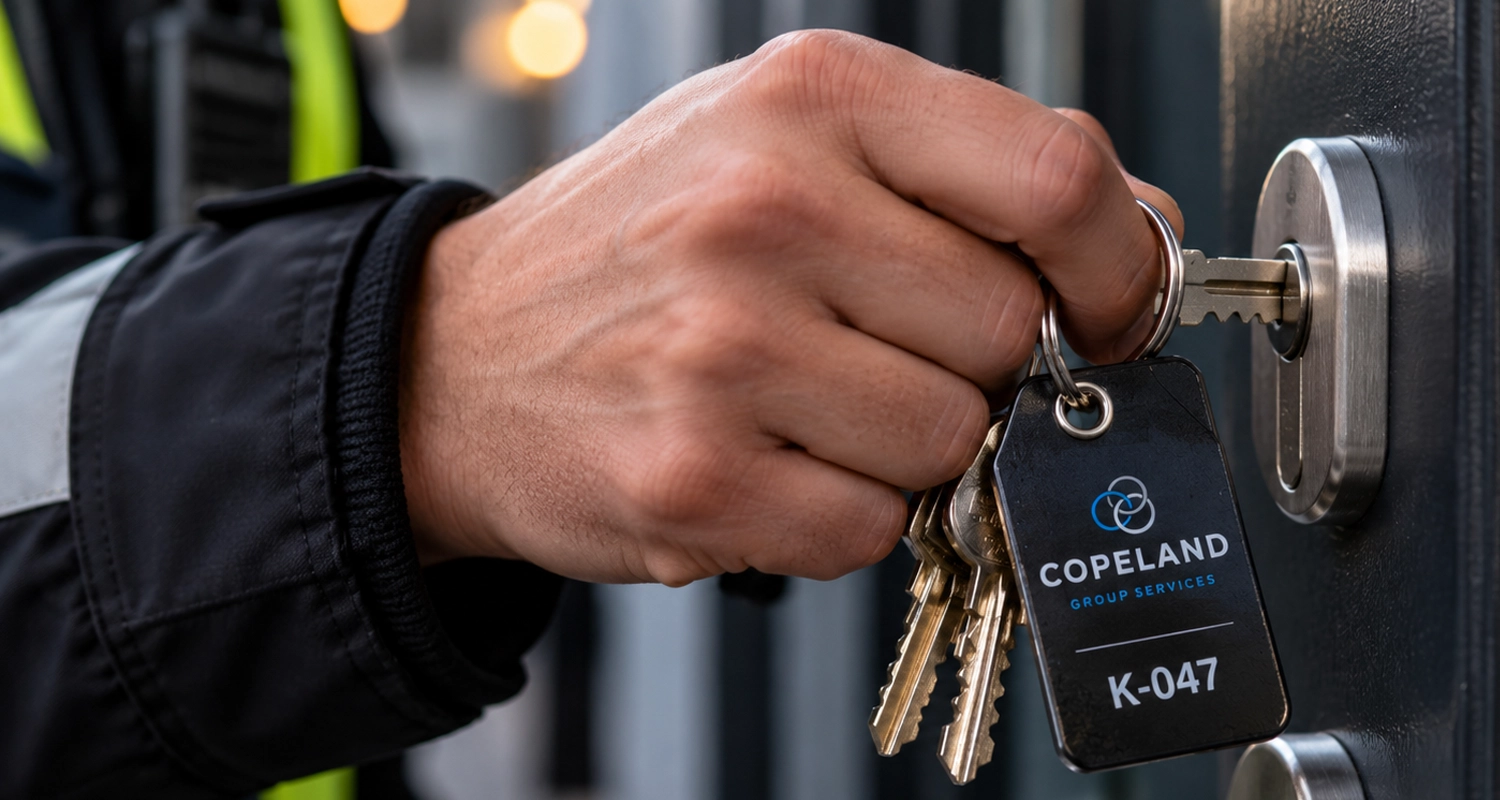
Professional keyholding arrangements should also avoid making keys unnecessarily identifiable if they were ever separated from the systems used to manage them. The wider process should be designed so that access information is handled securely and only used by authorised personnel.
For the client, that means the important question is not simply where are our keys?
It is how are they being managed?
What happens when an alarm activates?
This is where professional keyholding becomes much more than secure storage.
If an alarm activates outside normal working hours and attendance is required, a trained security officer can respond according to the agreed procedure rather than relying on a staff member being available.
That response can also be supported by other security services.
Through Virtual Guard, monitored CCTV may provide additional visibility around the premises. Mobile patrols can provide physical attendance across multiple locations, while Copeland’s 24 hour control room helps connect the different parts of the response.
The result is a much clearer process: an incident is identified, information is assessed and the appropriate physical response follows.
Keyholding works best as part of the wider security strategy
Professional keyholding is particularly effective when it connects with the way the building is already protected.
It can work alongside alarm response, mobile patrols, professional lock and unlock services, Virtual Guard, access control and manned guarding. Each service performs a different role, while the overall objective remains the same: making sure somebody knows what should happen when the site requires attention.
At Copeland Group Services, keyholding forms part of that wider blended approach.
Because handing somebody the keys to your premises should never simply mean hoping they are available when something happens.
It should mean knowing there is a professional process behind them.
If you are reviewing your keyholding or out of hours response arrangements, contact Copeland Group Services to discuss the most appropriate approach for your premises.
Discover more insights
Interested in learning more about business security? Explore our related posts below for further guidance.